Louis Bélanger (1756-1816)
Two animated views of the Jardin de Bagatelle

- Pair of gouaches on paper
- 60 x 50 cm
- Late 18th century
- - The Hermitage and the Obelisk
- - The Great Rock and the Cenotaph
Louis Bélanger nous partage avec ces deux gouaches un précieux témoignage de l’esprit de Bagatelle. Louis est le frère cadet de François-Joseph Bélanger qui est chargé par le comte d’Artois de la construction d’un pavillon de plaisance et la conception du parc avec Thomas Blaikie dans un style anglo-chinois, avec de nombreuses petites fabriques, grottes et cascades, très en vogue à l'époque.
Bagatelle was born of a challenge issued in 1777 by Marie-Antoinette to her brother-in-law, the Comte d'Artois: to build a small pleasure château, a Folie, in three months. The site already contained a building dating from the early 18th century, which was a place of debauchery for the Maréchale d'Estrées, Mademoiselle de Charolais and then Madam de Monconseil, hence the name Bagatelle. The Count of Artois won his bet by building his Folie in sixty-seven days thanks to his first architect, the brother of the author of these two watercolours.
During the Second Restoration, the Comte d'Artois gave Bagatelle to his son the Duc de Berry and then, on the latter's death, to the Duc de Bordeaux, the future Comte de Chambord. The estate was then abandoned by Louis-Philippe and sold to an Englishman, the Marquis of Hertford. Richard Wallace inherited the estate in 1871. In 1905, the City of Paris bought the estate, but many of the furnishings and works of art had already been dispersed. A number of sculptures and pieces of furniture are now housed in the world's greatest museums, including the MET in New York.
Louis Bélanger trained with Pierre-Antoine Demachy (1723-1807), Francesco Casanova (1727-1803) and Louis-Gabriel Moreau, known as Moreau l'Aîné (1740-1806), who had a major influence on his style. Before moving to Stockholm, where he ended his life as Painter to the Swedish Court, Louis Bélanger went into exile in London at the start of the Revolution, where his views of parks and gardens were appreciated and demanded by an aristocratic clientele. To meet the wishes of his patrons, Louis Bélanger did not hesitate to add whimsical touches to embellish reality. Our gouaches were probably painted during this period.
A privileged witness to the construction of Bagatelle, these unpublished views, typical of Louis Bélanger's work, add to our knowledge of the Bagatelle garden and confirm the locations of features that have now disappeared. We can easily recognise the landscape and ornaments of the estate, which can be seen in prints by Claude Fessard, Chéreau and Laurent Guyot, such as the Obelisk, the Hermitage, the cenotaph on the Ile des Tombeaux and the Grand-Rocher to his left in the foreground.
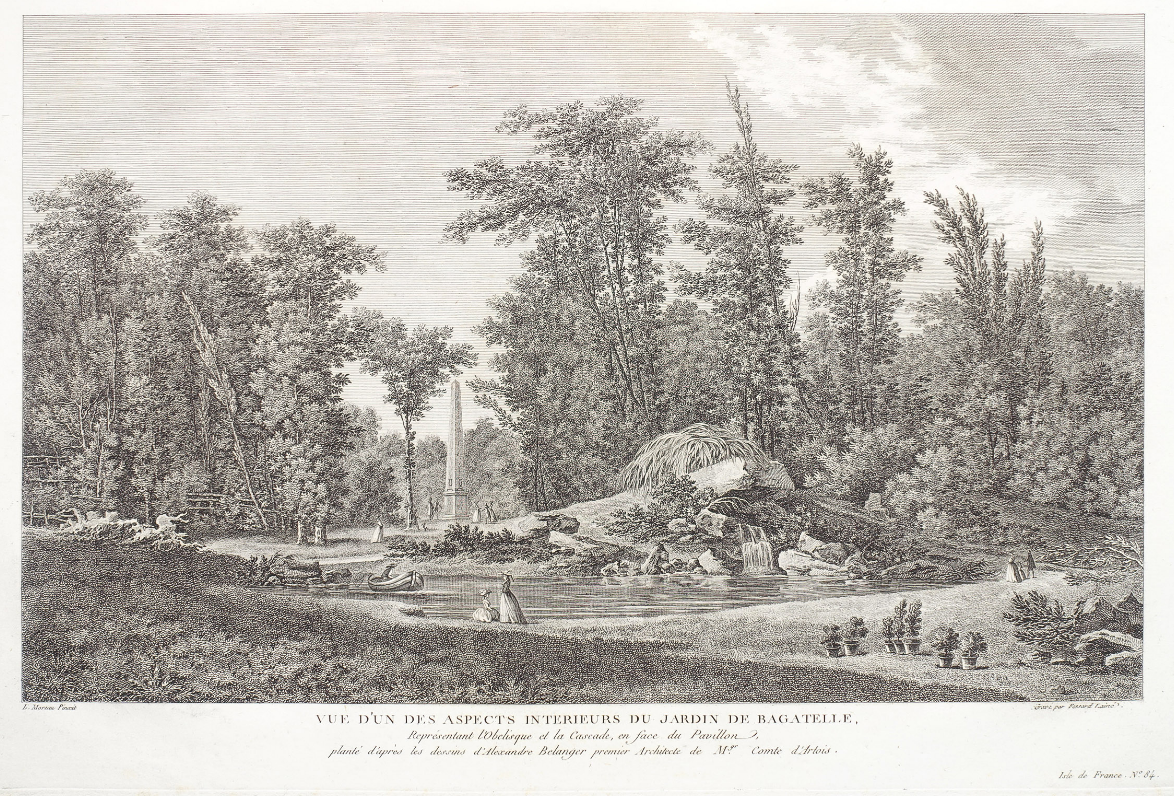
“View of the Jardin de Bagatelle and its obelisk” Claude Fessard, circa 1782, prints, Musée Carnavalet
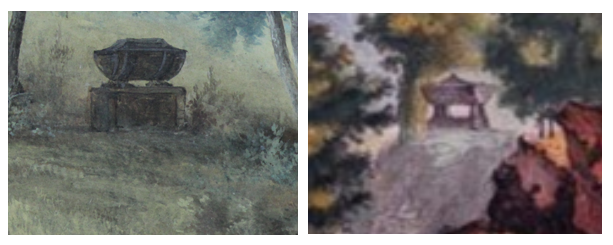
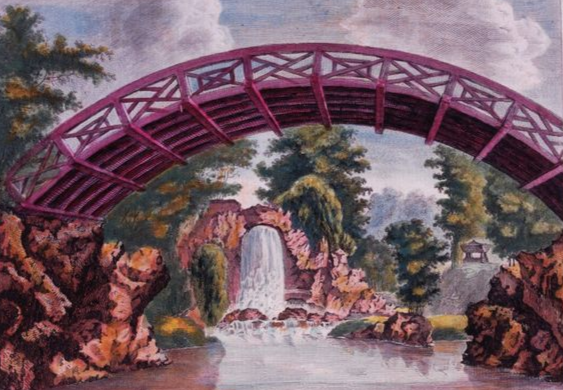
“View of the large rock at Bagatelle,” engraving executed around 1785 by Laurent Guyot and preserved at the Château de Sceaux. On the right, the cenotaph on the Île des Tombeaux.
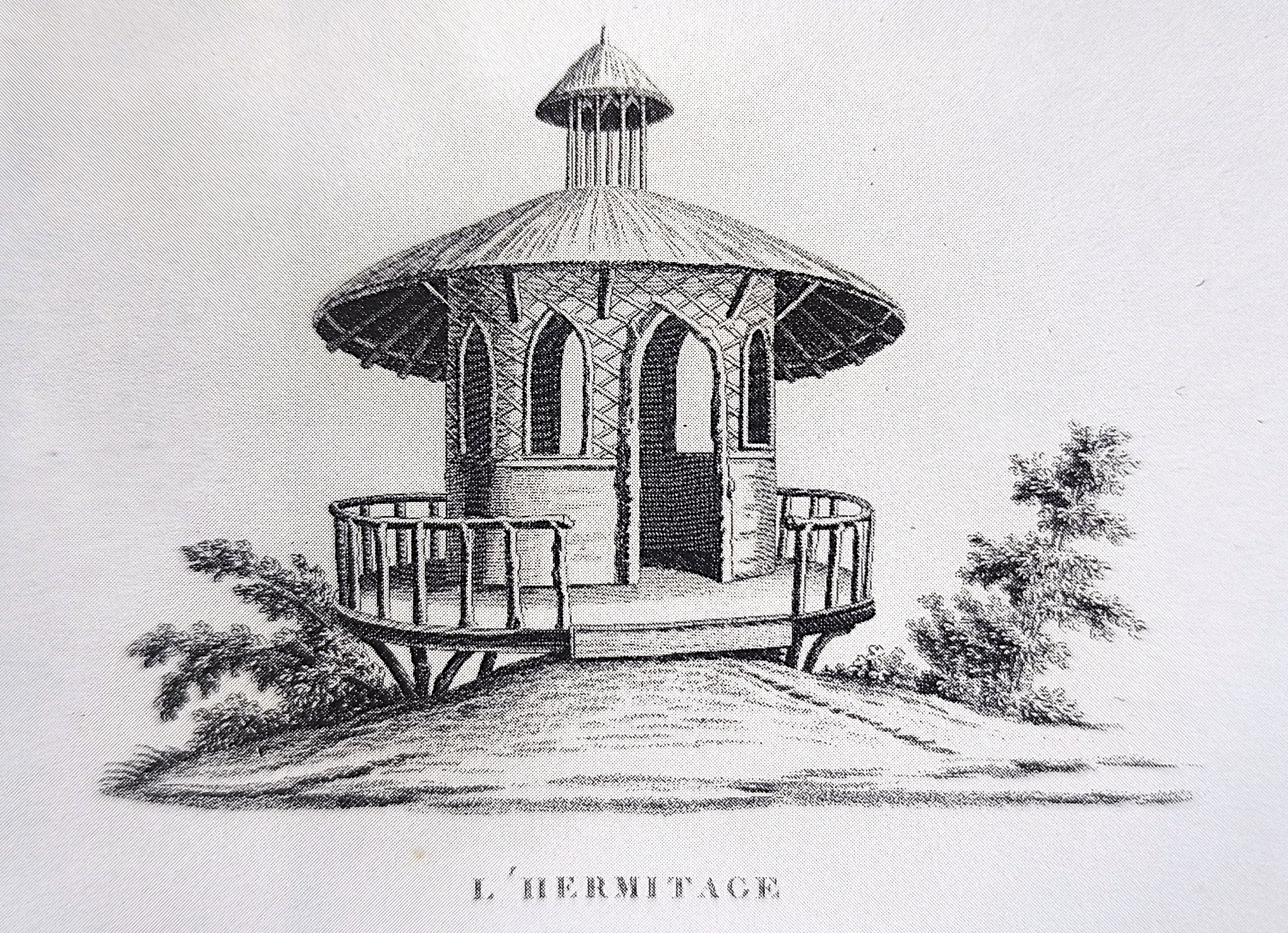
“L’Hermitage,” engraved by Chéreau
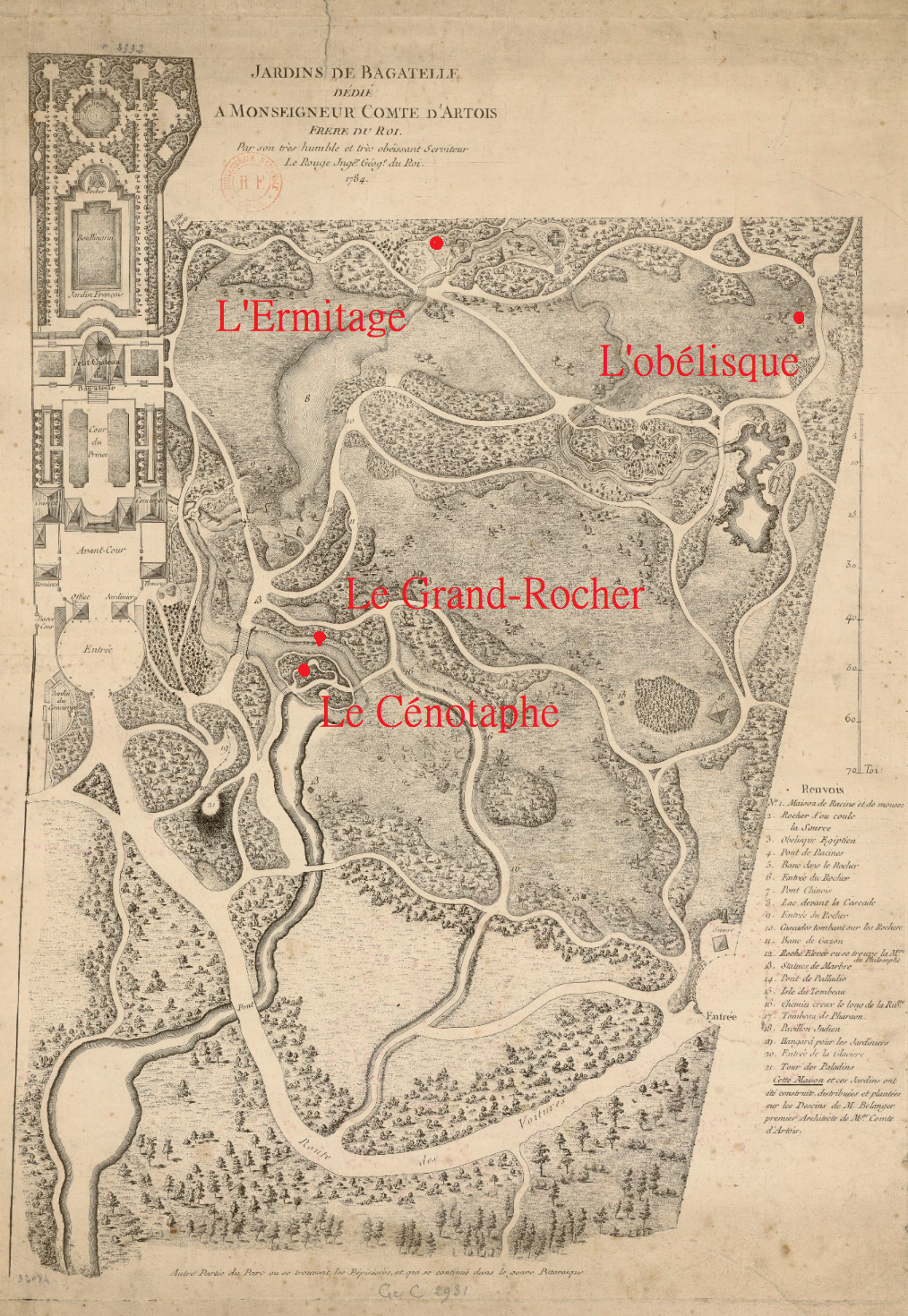 Gardens of Bagatelle Dedicated to His Excellency the Count of Artois, Brother of the King, by his most humble and most obedient servant, Le Rouge, Royal Geologist. 1784